4866 search results - page 785 / 974 » UML for Global Computing |
143
click to vote
ASPDAC
2006
ACM
16 years 1 months ago
2006
ACM
— Many of the issues that will be faced by the designers of multi-billion transistor chips may be alleviated by the presence of a flexible global communication infrastructure. I...
204
click to vote
INFOSCALE
2006
ACM
16 years 1 months ago
2006
ACM
— We consider the following situation for a given large-scale network: Starting from an initial node we move to its neighbor node and repeat that until reaching a target node. Ho...
191
click to vote
INFOSCALE
2006
ACM
16 years 1 months ago
2006
ACM
Huge amounts of data are available in large-scale networks of autonomous data sources dispersed over a wide area. Data mining is an essential technology for obtaining hidden and v...
202
Voted
NPAR
2006
ACM
16 years 1 months ago
2006
ACM
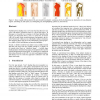
: Some example effects achieved by our extended toon shader: continuous levels of abstraction (a); abstraction of near-silhouette regions: smoothing (b), and opacity (c); backlight...
178
click to vote
SIGECOM
2006
ACM
16 years 1 months ago
2006
ACM

Braess’s Paradox is the counterintuitive but well-known fact that removing edges from a network with “selfish routing” can decrease the latency incurred by traffic in an eq...